

“NieR:Automata Ver1.1a”: Producer Opens Up About Her Passion for the Original Work and How She Poured Her Heart and Soul Into the Anime Adaptation [Part 1 of 2]
2024.08.16


2024.12.23


First published in 2003, Yuki Midorikawa’s “Natsume's Book of Friends” manga series has remained loved by fans even to this day. It was adapted into an anime series and, having been produced since 2008 when the series first started, has a total of 80 episodes, including a special episode released as an original video animation (OVA). A movie version was also produced.
Takahiro Omori has been involved with the anime series as director and general director. Over the past 16 years, anime production has undergone significant changes, including a greater use of digital technology. Omori discusses what has and has not changed in the production process of “Natsume’s Book of Friends.”
※This interview was conducted on September 11, 2024.
※The original Japanese article appeared on October 21, 2024.
目次

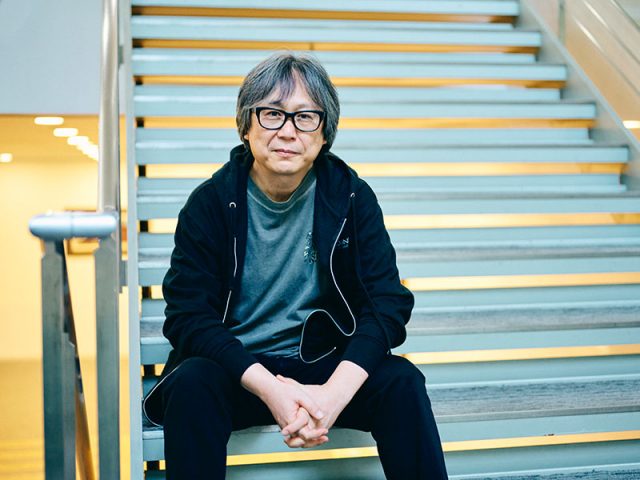
Takahiro Omori
Takahiro Omori is an animation director and producer. His notable works include “Natsume's Book of Friends,” “Hell Girl,” “Baccano!” and “Durarara!!”
Click here to view the first part of this article: 7th Season of “Natsume's Book of Friends” Soon to Begin Airing: General Director Omori Reflects on 6,000 Days of Making the TV Anime [Part 1 of 2]
――You have directed many episodes of “Natsume’s Book of Friends” the anime over the past 16 years. Which are the more memorable ones for you?
Last year, at a “Revacomme!!xTV Anime ‘Natsume’s Book of Friends’ 15th Anniversary Event” (on December 2, 2023), fans voted to select the most popular episodes.
The most popular episodes included those in which Takashi Natsume and Nyanko-sensei, the main characters, didn’t have significant roles (for example, “Touko and Shigeru,” the 10th episode of the fifth season, was voted the most popular, and “Young Days,” the 4th episode of the third season, was voted the third most popular). As a director, I was surprised by this result, although it made me realize that fans serious enough to attend such an event have particular taste for the episodes they like.
――I guess people who come to fan events are typically very passionate about the work, so this result may not be too surprising. In a way, it goes to show that there are many fans of the peripheral characters, rather than Takashi or Nyanko-sensei, and that these broad aspects of this anime are loved by fans.
What I notice each time I attend a fan event is that fans of “Natsume’s Book of Friends” always keep a promise whenever I tell them something and it’s off the record. None of the inside stories or spoilers I gave them have been leaked. It is helpful for us to fans who are highly literate and who love this anime.
In addition, these fans have a strong level of comprehension so even if we introduce a tacit expression that may need more explanation in words, they will understand it. That is helpful for us in making the anime and they make us feel rewarded.


――You introduced several original episodes for the anime version.
When we began the production of the anime, it was not long after the original manga series had begun, and we didn’t have enough episodes for our anime series. So, we said we need some original episodes. And it was so fortunate for us that the original author, Midorikawa-sensei, liked the idea of adding episodes just for the anime. She was like, “Go ahead and play with these characters” or “I would definitely want to see what it would be like!,” which was encouraging coming from the viewpoint of her, as a fan of our anime version.
――I would imagine the best vote of confidence for anime producers is when the original author tells you they wants to see what you may make.
Definitely. Midorikawa-sensei has been incredibly supportive of our anime version. She even opened a social media account and reposts our posts.
――What kind of things do you and Midorikawa-sensei discuss when you create original episodes?
I sometimes write scripts for the drama CDs [a kind of audio book with original content] of “Natsume’s Book of Friends,” and when I do, I send the script back and forth with her and we discuss and work out minute details. Once she accepts a base episode I propose, I may, for example, ask something like, “What would this character say in this situation?” which may be returned with a comment like, “You may want to use this line.” That’s how I draw ideas from the author.

――“Natsume’s Book of Friends” has been made by a production staff that has remained almost unchanged for 16 years, and I think that’s one of the things that characterize the anime version. How do you feel about that?
What’s great about it is that we have worked together for so long that our goals as a staff have aligned. The strength of our team is that we share a tacit criteria that enables us to say to ourselves, for example, “We can go this far as a way of expression but we shouldn’t go any further because doing so would make the anime deviate from the atmosphere of the original manga.” We don’t even need to point out things like this to each other.
Furthermore, the staff members share a firm image of the characters of “Natsume’s Book of Friends,” which allows them to offer up many ideas. This is another advantage, I think. I think ideas that were offered up by the members of the staff add accents in a positive way to the anime.
――So, the staff gets to familiarize themselves with the work on a deeper level by working on the same production for many years, and that results in a better anime.
Having worked on the series up through the seventh season, the staff of Shuka (the animation production company that has been working on “Natsume’s Book of Friends” since the fifth season) has become really reliable, so they are now able to produce the series mainly with their in-house staff. That’s another important thing about working on the anime for many years.

――For the seventh season, you serve as the general director and Hideki Ito, who directed “Natsume's Book of Friends: The Waking Rock and the Strange Visitor” has been newly appointed as the director.
Ito-san makes very gentle images that have a soft touch. I was watching the production process from a slightly detached standpoint and Director Ito may have had a tough job as he had to face the project head-on, but I think this season really reflects what Director Ito does best, the soft touch.
――Other key staff members have remained the same as before. Makoto Yoshimori has composed the music that has resonated emotionally since the first season. What makes his music so attractive?
Yoshimori-san has actually composed about 120 tunes so far for “Natsume’s Book of Friends.” I have enlisted Yoshimori-san’s music for other works I’ve done, since before “Natsume’s Book of Friends." The first time we worked together was on “Gakuen Alice.” Before that, we were just friends meeting up for drinks sometimes.
Yoshimori-san always has a very deep understanding of the original manga. For each season, we prepare an order form called a “music menu” to outline the image we have for the production and ask Yoshimori-san to compose original songs, of course, but he says he can write the scores if he has only the (song) titles and their desired ballpark lengths in minutes. I think he can do that because he puts sincere effort into reading and understanding the original manga.
He sometimes gets carried away and writes a song that cannot be used in the intended anime (laughs), but I appreciate his effort to experiment with music for our anime, always maintaining this adventurous spirit. In recent projects, he has said we can use his music in whichever way we see fit for our production and that he would leave everything up to us.
――You have also worked with art director Yukihiro Shibutani since the first season.
When this series began, the entire animation industry was transitioning from an analog to a digital environment, and even the resolution of the video was yet to be established. (The full transition of TV broadcasts to the digital terrestrial system took place in July 2011.)
Even as digitalization was progressing, Shibutani-san remained particular about using a paper-like texture. Even though the staff had moved on to a digital drawing environment, Shibutani-san has pretty much continued to use watercolor to draw. We use digital technology for the finishing touch, but he really values the touch of watercolor.
Beginning with the sixth season, we have an art director named Mao Miyake-san, on board. She has dexterously broadened the scope while keeping the taste of the artwork intact. These two people inspire us, and we continue to create something new, sometimes looking back on what we have created in the past, going, “What was the sunset like in that episode?” or “What was the special setting for that one?”

――You mentioned the changes taking place in the animation production process. What kind of impact did such changes have on the production process for “Natsume’s Book of Friends” over the past 16 years?
It’s not like our production process has undergone a drastic change. From the beginning, we created anime out of something originally drawn on paper and tried to keep the touch unchanged in the animation production, because I like that sort of feel. So, I think the quality of work basically doesn’t change whether we use digital technology or paper.
But during the production process of the seventh season, we noticed significant changes in the fineness of the lines due to the increased use of digital animation. When we were drawing with paper and pencil, lines never got too thin no matter how thin we tried to draw, because of the limitation of paper and pencil.
But you can make lines extremely thin using digital drawing. And sometimes footage turns out to have lines that are too thin. The characters in “Natsume’s Book of Friends” have simple designs, so I think it’s better to use lines that are thick, at least to a degree, so that nuances in the lines can be perceived. The power that lines have is important to me, and if lines are too thin, it’s difficult to use the footage, no matter how carefully it is done.
――So nuanced lines are responsible for the gentle, delicate feel of the “Natsume’s Book of Friends” anime.
In addition to that, digitization has given us a vast number of color options. Another important thing, I think, is to maintain the typical colors that give “Natsume’s Book of Friends” the great touch it has.

――The seventh season is finally set to be aired. What aspects of the season do you want the fans to take notice of?
Actually, we closed the sixth season without, so to speak, resolving a mystery, or, to put it another way, we left loose ends. Our assumption was that we would soon be able to make the seventh season to follow up after the sixth season was done, but it took longer than we had expected, and I felt bad for the fans. So, I’m frankly glad we were able to finally complete the seventh season without a hitch.
――You have been involved with the anime for so long. And it looks like “Natsume’s Book of Friends” will still continue for a long time. Do you have any goals for the future?
“Natsume’s Book of Friends” has become the work I have been involved with the longest in my career, and the anime has continued this far as it has run side by side together with the original manga. As for the future, when the original manga reaches its end, my hope is that we can give an ending to our anime version that is satisfying to the fans.
――I think the number of fans who eagerly watch “Natsume’ s Book of Friends” have increased over its 16-year run, and I am looking forward to seeing how the story will develop going forward.
When I attend fan events, sometimes I find parents and children who watch the anime together. We didn't make it something that would be overly sensitive to current trends, and I’m glad it has become something that can be enjoyed for a long time. It’s an anime work you can enjoy whichever episode you begin with. It will be great if people enjoy it for many years to come.

Click here to view the first part of this article: 7th Season of “Natsume's Book of Friends” Soon to Begin Airing: General Director Omori Reflects on 6,000 Days of Making the TV Anime [Part 1 of 2]
Text by Hidekuni Shida
Photos by Kei Masuda
Translated by Atsushi Kodera
2024.08.16
2024.07.31
2024.03.05
2024.02.16
2023.11.15
2023.10.30
Follow the official Sony Music SNS
Get the latest news from Cocotame